Daisy Story: A Script for Real Projects
As a designer who’s worked with countless typefaces, I always approach a new font with a mix of curiosity and skepticism. Daisy Story, a script handwritten font, caught my attention not just for its aesthetic appeal but for its potential in real-world design scenarios. This review is based on hands-on testing across multiple projects, from branding to digital marketing, and it’s clear that Daisy Story has both strengths and limitations worth considering.
The First Impression: A Warm, Playful Mood
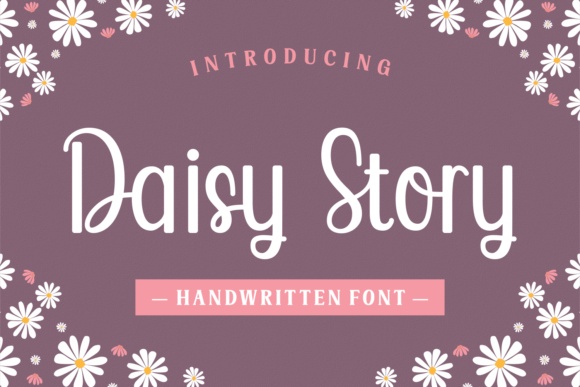
When I first saw Daisy Story, I was struck by its soft, flowing strokes and the sense of warmth it exudes. The letters feel handcrafted, almost like a personal note or a heartfelt message. It’s not overly ornate, but it carries a friendly, approachable vibe that makes it ideal for brands aiming to convey authenticity and charm.
The visual personality of Daisy Story leans toward the whimsical and the nostalgic. It feels right at home in creative spaces—think indie boutiques, artisanal products, or lifestyle brands looking to stand out without being too flashy. However, it’s not a font you’d use for high-end luxury or corporate messaging. Its character is more about personality than polish.
Real-World Performance: Versatile but Context-Dependent
In practical design work, Daisy Story performs well in smaller text sizes and short phrases, where its legibility holds up. It works great as a headline or subheadline in logos, packaging, and social media graphics. But when used in larger formats, such as billboards or posters, the detail can become lost, making it less effective as a primary display font.
For logo design, Daisy Story is a solid choice if the brand wants a personal, handmade touch. It pairs well with modern typography, especially when contrasted with a clean sans serif font. However, it may not be the best option for minimalist or high-tech brands that require a more streamlined look.
In editorial design, Daisy Story adds a unique flair to headlines or pull quotes. It can elevate a magazine spread or blog post with a personal, artistic touch. But again, it needs to be used sparingly to avoid overwhelming the reader.
Where to Use Carefully: Balance Is Key
While Daisy Story is a creative font with a lot of character, it’s not suitable for every design scenario. Large headlines, for example, can become messy if the font isn’t properly spaced or scaled. Short phrases are better suited to this style, as longer text can reduce readability and visual clarity.
Brand marks or decorative accents that rely on subtle details might not benefit from Daisy Story’s bold strokes. Similarly, premium packaging or high-end marketing materials could suffer from the font’s informal tone. In these cases, a more refined script or serif font might be a better fit.
Social media posts and supporting text also require caution. While Daisy Story can add a fun element to a post, it may not be the best choice for body text or captions where clarity is essential.
Readability and Brand Consistency
One of the biggest concerns with any handwritten font is how it affects readability. Daisy Story is relatively easy to read in small sizes, especially when paired with a complementary font. However, it’s important to test it in black and white to ensure it doesn’t lose its clarity under different conditions.
For brand consistency, Daisy Story can be a powerful tool if used thoughtfully. It helps create a memorable visual identity, especially for brands targeting younger audiences or those with a creative, artisanal angle. But overuse can dilute its impact, so it’s best reserved for key elements rather than entire designs.
Audience trust and professionalism are also factors. While Daisy Story adds a personal touch, it may not convey the same level of authority as a more traditional typeface. Designers should consider their target audience and the message they want to communicate before deciding to use it.
Practical Designer Notes: Test, Compare, and Confirm
Before finalizing any project with Daisy Story, I recommend testing it in various contexts. Try it on real mockups, check how it looks in small sizes, and compare it with other fonts. A good practice is to pair it with a serif font, a sans serif font, or another script font to see how it interacts visually.
Also, make sure to review spacing and letterforms carefully. Handwritten fonts often have irregularities that can affect alignment and overall design harmony. If you’re using Daisy Story for commercial purposes, confirm the licensing terms to ensure it’s suitable for client or business use.
Finally, remember that while Daisy Story is a premium font with a unique personality, it’s not a one-size-fits-all solution. It shines in specific applications, particularly in creative and expressive design work. For other scenarios, a more versatile display font or a clean sans serif may be a better choice.
Conclusion: A Font with Purpose, Not Just Personality
Daisy Story is a compelling option for designers looking to add a human, handmade touch to their work. It’s ideal for brands that value creativity, authenticity, and a personal connection with their audience. However, it requires careful consideration and thoughtful application to avoid overuse or misplacement.
If you’re working on a project that benefits from a warm, expressive typeface—like a lifestyle brand, a craft business, or a digital product with a playful tone—Daisy Story is worth exploring. Just remember to balance its charm with practicality, and always test it in real-world conditions before finalizing your design.